Loose 14x28x1 Filter? How Much Air Bypasses It
TL;DR
A 14x28x1 air filter measures about 13.5 by 27.5 inches, so clearance on every side is intentional. Whether it costs you anything depends on the slot behind it rather than the gap itself. Air routed around the media arrives unfiltered, and higher-rated filters lose more to the same opening. Sealing the slot beats upgrading the filter.
I pulled a filter from a return slot last spring and it came away with no resistance. The frame had shifted off the rail and I could see light along one edge. The homeowner had paid extra for a MERV 13. Every minute the blower ran, house air went past that filter instead of through it.
Top Takeaways
- A 14x28x1 measures about 13.5 by 27.5 by 1 inch, leaving roughly a quarter inch of clearance per side.
- Filter bypass is return air travelling around the frame instead of through the media, so it arrives unfiltered.
- EPA states that duct-mounted filter effectiveness can be substantially reduced by leakage around a poorly matched frame or gasket (EPA technical summary).
- A higher-rated filter loses more to the same gap, because added resistance pushes air toward the easier opening.
- A loaded filter makes bypass worse, so filtration drops fastest before a change.
Why Is My 14x28x1 Air Filter Smaller Than the Opening?
Because 14x28x1 names the slot, not the filter. The published actual dimensions for this size are 13.5 by 27.5 by 1 inch, half an inch under nominal on both faces so the filter slides in without binding or tearing.
That leaves a quarter inch per side. Every 1-inch filter carries this undersize, part of why filter size matters more than most homeowners expect. The clearance is not the fault. What sits behind it is. A rail overlapping the frame closes the clearance under suction. A plain channel leaves it open into the return.
How Much Unfiltered Air Slips Past a Loose Filter?
No honest single figure exists, and any source quoting one flat percentage is guessing. The share depends on how much gap is open and how hard the media is to push air through. Air takes the easier path, and a pleated filter is harder to move air through than an open slot.
That reverses what most people assume. Moving up to a MERV 13 and the finer particles it catches raises the pressure the blower fights, which makes any open gap comparatively more attractive.
EPA separates efficiency from effectiveness. Efficiency is measured on the media in a laboratory. Effectiveness is what happens in your house (EPA technical summary). A MERV number describes a filter. It does not describe a filter slot.
Three Kinds of Filter Slot, and Only One of Them Seals
Not every quarter inch behaves the same way. The slot type, rather than the gap measurement, decides whether the clearance costs you anything. Some slots close their own clearance under suction. Others hold it open around the perimeter.
1. Rail-overlap slot. A lip laps over the face of the filter frame. Suction pulls the frame flat and the clearance closes itself. A quarter inch here is harmless.
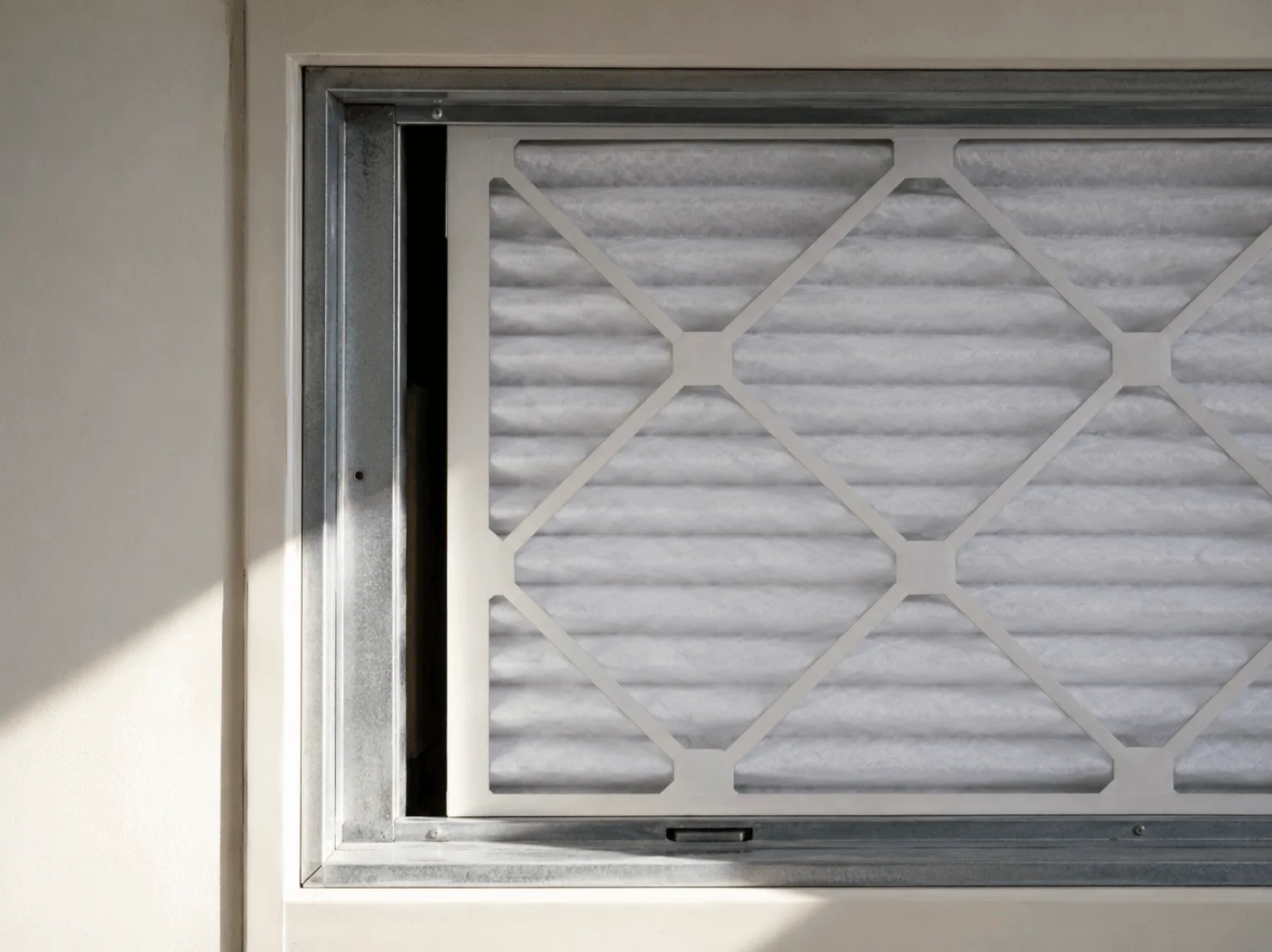
2. Butt-fit slot. A plain channel with no lip, holding the air filter at its edges. The clearance stays open around the perimeter whenever the blower runs. This is the type I find most often on 1-inch returns.
3. Open-face slot. No access door, so the filter edge shows from the room. Perimeter clearance and door opening both feed the return.
Fixes escalate with the type. Rail-overlap needs nothing. Butt-fit needs a rail gasket. Open-face needs the gasket first, then a cover. Two homes can have the same filter and the same quarter inch with completely different filtration, purely because one installer bent a lip of metal and another skipped it.
How Do I Tell if Air Is Bypassing My Filter?
Pull the filter and read the dust. Air that went through the media leaves an even gray face. Air that went around it leaves the media pale along one edge and grit on the rail.
1. Read the loading pattern. A lighter band along one edge means air entered beside the filter.
2. Check the rail. Clean media with a dirty track is the clearest sign.
3. Look downstream. Fuzz on the coil or dust in the blower housing means air is getting past.
4. Hold tissue near the cover seam with the blower running. A pull toward it means an open path.
5. Measure. More than a half inch of slack, or no overlapping rail, needs sealing.
Why Does My 14x28x1 Filter Rattle in the Return?
A rattle means the filter is moving, and a filter that moves is sealed against nothing. Suction pulls the frame against the rail and releases it as static pressure fluctuates. Rattling worsens as the filter loads, which is when bypass worsens too. A bowed filter is worse still, because deflected media pulls the frame off the rail.
How Do I Seal a Loose 14x28x1 Filter Slot?
Seal the slot, not the filter. ENERGY STAR advises closing the access cover and, where none exists, sealing the opening with tape or a magnetic cover (ENERGY STAR HVAC guidance). Buy three things first.
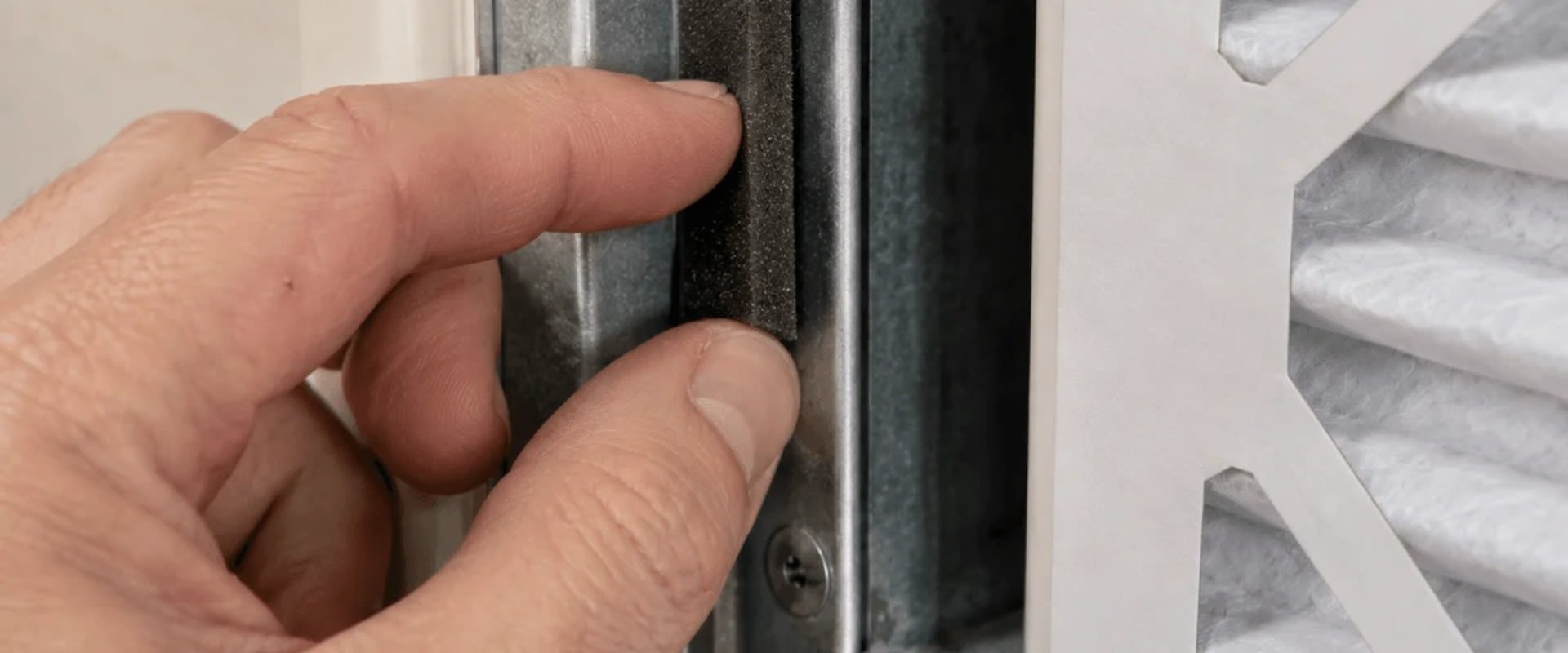
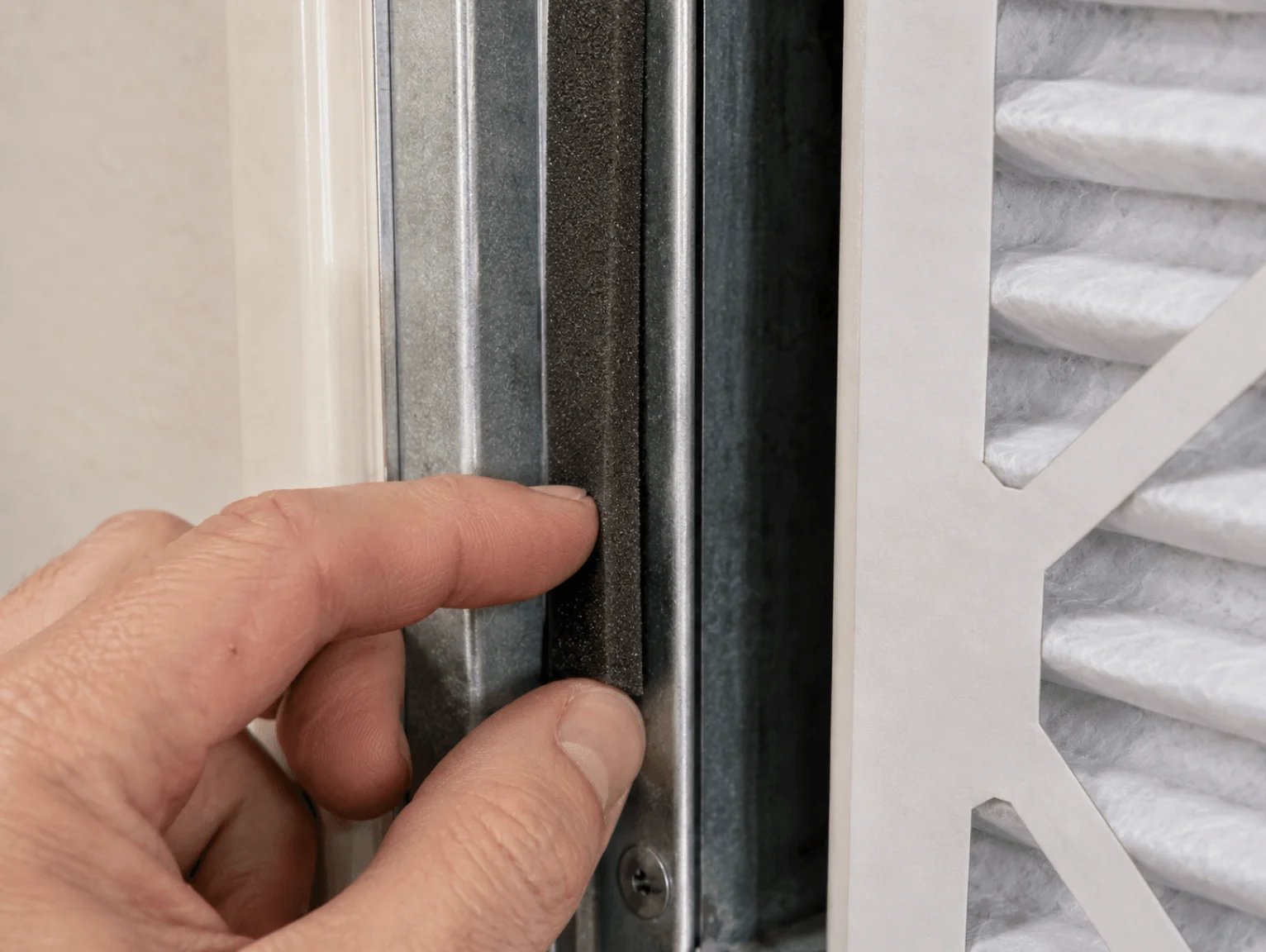
- Closed-cell foam weatherstrip, about a half inch wide. Open-cell foam absorbs condensation and grows mold.
- Foil tape rated for HVAC use, not cloth duct tape. Cloth tape dries out and can fail in one attic summer.
- A magnetic sheet or thin panel, only if the slot has no door. Skip caulk and spray foam, since you reopen this slot every few months.
1. Keep the correct size. EPA guidance is that a filter fit snugly without being crushed (Guide to Air Cleaners in the Home).
2. Gasket the rail so each filter compresses the same seal. Check the airflow arrow too, because a filter seated backwards undoes a good seal.
3. Close the access cover and seal the seam with foil tape. Most people skip this.
4. Cover an open slot with a magnetic sheet or panel.
5. Reseal at every change. ENERGY STAR recommends a monthly check and a change every three months (Heat and Cool Efficiently).
Never tape across the media face. That raises pressure drop and starves the airflow the system needs.
When the Gap Is Not the Problem
Seal the slot and the dust keeps returning? Four other causes produce the same symptoms, and no gasket at the filter fixes any of them.
1. Return duct leaks. Leaks upstream pull attic or crawlspace air into the same airstream, unseen by the filter.
2. An unsealed filter grille. The joint between grille frame and drywall is a bypass path, missed because it looks like trim.
3. A leaky air handler cabinet. Panel gaps downstream draw air in past the filter.
4. Sources the filter never sees. Filtration happens only while the blower runs, and EPA notes central systems usually run under a quarter of the time in season (Guide to Air Cleaners in the Home).
Heavy buildup on the coil or blower wheel is accumulated damage rather than a live leak. Cleaning a coil is a technician job, and sealing the slot stops it worsening without undoing it.
What I Tell Homeowners
“The gap is almost never the reason a filter underperforms. The reason is that nobody put anything in the gap. Ten minutes with foam tape does more for the air in a house than moving up two MERV steps.”
“When somebody tells me they just bought a MERV 13 and the house is still dusty, I stopped asking about the filter years ago. I ask them to describe the metal it sits in.”
— Mike Lenkiewicz
Supporting Statistics
- 20 to 30 percent of duct airflow is lost to leaks. That share escapes through leaks and poor connections (ENERGY STAR). The ducts feeding your filter already leak, so a slot gap adds another unfiltered path.
- Indoor pollutant levels run 2 to 5 times higher than outdoor levels. Americans spend about 90 percent of their time inside (EPA Report on the Environment). Air slipping past the filter is the air you breathe nearly all day.
- A MERV 13 must capture at least 50 percent of 0.3 to 1.0 micron particles. Measured in a laboratory (EPA MERV table). The same gap takes a bigger share from a MERV 13 than a MERV 8.
Frequently Asked Questions
Should I Buy a Slightly Larger Filter to Close the Gap?
No. A forced filter bows, and deflected media pulls the frame off the rail, opening a wider path than the clearance you wanted gone. Keep the nominal size and seal the slot.
Is It Safe to Use Tape Around a Filter Slot?
Tape on the sheet metal and cover seam is standard practice, and ENERGY STAR describes sealing a visible opening that way. Taping across the media is not safe, because it reduces the open area the blower needs.
Can a Loose Air Filter Damage My Air Conditioner?
Indirectly, yes. Unfiltered air carries dust to the coil and blower wheel, and a fouled coil reduces heat transfer and makes the system run longer.
Would a 4-Inch or 5-Inch Filter Fix This?
Only if the slot is built for one. Deeper media lowers resistance, reducing the pressure pushing air toward a gap, but it does not seal it.
Is a Gap Around the Filter Ever Acceptable?
Yes. Where the rail overlaps the frame and the access cover seals, the clearance still exists but no longer forms a continuous path into the return. What you want gone is the open channel, not the clearance itself.
Seal the Slot Before You Upgrade the Filter
The quarter inch around a 14x28x1 filter only costs you air when nothing fills it. Measure your slot against the actual dimensions, gasket the rail, and let the media do the work you paid for.
Glossary
- Nominal size. The rounded label a filter is sold under. It names the slot, not the filter.
- Actual size. The measured dimensions of the filter. For a 14x28x1, about 13.5 by 27.5 by 1 inch.
- Filter bypass. Return air travelling around the frame instead of through the media.
- MERV. Minimum Efficiency Reporting Value, from a laboratory test of the media. A MERV 13 must capture at least 50 percent of 0.3 to 1.0 micron particles (EPA MERV table).
- Return plenum. The chamber collecting air before the blower. It pulls air through any gap.
Learn more about HVAC Care from one of our HVAC solutions branches…
Filterbuy HVAC Solutions - West Palm Beach FL
1655 Palm Beach Lakes Blvd., Ste 1005 West Palm Beach, FL 33401
(561) 448-3760
https://maps.app.goo.gl/VarpgNZnxuPQuW8A7